I'm pleased to announce that the book I wrote a little over a year ago: How to Write a Zotero Translator (2009) has been released as a user-editable wiki on the Zotero website, released under an "Attribution-NonCommercial-ShareAlike 3.0 Unported" license.
The new version, How to Write a Zotero Translator ++, contains all the original text, but allows anyone with an understanding of HTML, JavaScript and Zotero translators to update the book. This became necessary as Zotero is an ever-evolving program and in the 17 months since I first released the guide, much has changed.
I encourage anyone with the required skills and energy to help make this resource as useful as possible for as wide an audience as possible.
Thanks to Rintze Zelle and Tom Roche for bringing the need to create a wiki version of the book to my attention.
And I leave with a challenge: take a look at your past works. Would any of them benefit from being released in a similar fashion?

Wednesday, August 4, 2010


Wednesday, June 2, 2010
Who are the #hackacad contributors?
If you've missed it, Hacking the Academy (#hackacad) has just finished its 1 week call for content. The project, initiated by Drs. Scheinfeldt and Cohen at the Center for History & New Media at George Mason University, is an attempt to crowdsource enough good content to create a book in a single week.
As I mentioned on Twitter, the project attracted approximately 190 different authors who contributed almost 330 entries. 90 of the entries were written specifically for Hacking the Academy, while the remainder were old posts, videos or presentations that authors felt fit the mandate of the planned book.
The project is now into its second phase: reorganizing the ~330 entries into manageable groups and whittling down the number to something that might be publishable.
I was curious who the contributors were and where they came from, so I went digging.
I was able to tie 133 of the 180 to an institution with the help of Google and all those C.V.s people have on their blogs. I'm sure it's not 100% accurate, but it is probably good enough to give a rough idea. The graph shows the number of posts by institution, including all schools with 4 or more posts (click to see full size):

I probably should have also included group blogs such as University of Venus (14 posts) and Professor Hacker (7 posts). The chart shows the folks at CHNM definitely got on the bandwagon, which is great. But, at least in the first draft, one might suggest the entries are geographically...biased. I guess that's what happens when entrants are self-selected.
Stay tuned for another chart when the final version comes out.
As I mentioned on Twitter, the project attracted approximately 190 different authors who contributed almost 330 entries. 90 of the entries were written specifically for Hacking the Academy, while the remainder were old posts, videos or presentations that authors felt fit the mandate of the planned book.
The project is now into its second phase: reorganizing the ~330 entries into manageable groups and whittling down the number to something that might be publishable.
I was curious who the contributors were and where they came from, so I went digging.
I was able to tie 133 of the 180 to an institution with the help of Google and all those C.V.s people have on their blogs. I'm sure it's not 100% accurate, but it is probably good enough to give a rough idea. The graph shows the number of posts by institution, including all schools with 4 or more posts (click to see full size):
I probably should have also included group blogs such as University of Venus (14 posts) and Professor Hacker (7 posts). The chart shows the folks at CHNM definitely got on the bandwagon, which is great. But, at least in the first draft, one might suggest the entries are geographically...biased. I guess that's what happens when entrants are self-selected.
Stay tuned for another chart when the final version comes out.
Tuesday, May 25, 2010
The End of People Moving? Follow the Grad Students
 An original article written for #hackacad
I'll be presenting in Montréal later this week, from the comfort of my Vancouver home, 3 500km away. It may seem like something out of a 1950s commercial for picture-phones, but as we all know, it's really not that complicated anymore. In this case, all I need is a webcam and an Internet connection.
As soon as I've finished this article, I'll don my dinner jacket and ascot, sit by the fire in a wingback chair and record a video of myself speaking with a fake British accent. I'll then post it online where my graduate student colleague in Montréal can access it and show it in a week's time at the conference. As he is co-leading the project with me, I trust he will have no trouble answering any questions the audience members may have about our work.
Distance travelled: 0km
Total Distance not travelled: ~7000km
Total cost: $0
The work I'll be discussing is a virtual network of scholars I helped establish this past year for graduate students looking to reach audiences beyond the academy. Every five months we put out an internal call for participation that asks members to draft an idea to submit to an editor. We then meet to offer encouragement and feedback on the drafts.
Please note that by “meet” I mean none of us leave the comfort of our homes. We leverage the power of a Google Group and email to bring together graduate students from 17 different Canadian institutions of higher learning. After our first call for participation, our members had a 75% publication success rate - far higher than the 10% return most new freelance writers can expect.
Distance travelled: 0km
Total distance not travelled: ~22 000km
Total cost: $0
On Monday, I have a meeting with colleagues in Ottawa, Edmonton, Toronto, Saskatoon and Tokyo. We've decided to forego the collective 17 000km it would take to bring us all together, and instead we'll be meeting via Skype.
Distance travelled: 0km
Total distance not travelled: ~ 39 000km
Total Cost: $0
It's a good thing we're getting used to Skype, because we're meeting to discuss a virtual workshop we're hosting in October that will bring together 20 graduate students from around the world. The event will be held online using Skype, Flickr, YouTube, Wordpress and email. Students who would never have otherwise had an opportunity to meet in person will be able to do so without having to leave town. We've never done anything like this before, so there's a bit of that will anyone come to my party feeling, but I'm happy to report that with several weeks to go until the deadline we've already received applications from over a dozen students in four countries on three continents.
Distance travelled: 0km
Total distance not travelled: ~ 95 000km
Total cost: $400 (we're issuing headsets to all participants to ensure our cross-continental workshop has good sound quality).
The idea for the workshop came from a Canadian virtual reading group that graduate students have been running of their own initiative since September. Students from across Canada meet once a month - you should be catching on to the meeting venues by now - to critique dissertation chapters and draft articles. The tools of their trade are Skype, email and Google Groups. With them, these students have developed a long-lasting collegial rapport with one another, which no one-time event could achieve.
Distance travelled: 0km
Total distance not travelled: ~ 145 000km
Total cost: $400
The Canadian Historical Association's (CHA) annual meeting is being held next week in Montréal. This is the biggest annual historical conference in Canada with thousands of people attending to witness approximately 400 scholars present papers.
I've been trying to find an interested graduate student who plans to attend the conference, and who could audio record presentations that would then appear online. This would allow people who were unable to travel to Montréal to access the information that was shared at the conference. Unfortunately, so far every response I've received is, “sorry, I'm only going to my own session and then going home.”
Distance travelled: ~1000km / participant * 1000 = 1 000 000km?
Total distance not travelled: ~ 145 000km
Total cost: $Millions
Maybe it's time we followed the lead of these graduate student initiatives and started moving information, not people.
Adam Crymble lives in Vancouver where he works for a national network of researchers. His boss lives 3 368 km away.
Tuesday, May 11, 2010
Online Versus Face-Time
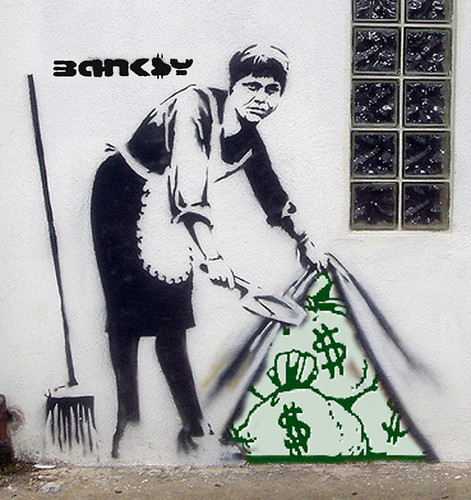 Library and Archives Canada (LAC) is cutting an on-site World War I workshop intended for high school history classes, and took some heat in the Globe and Mail for the decision (the article, "First World War workshops soon to be history" [Feb. 25, 2010] is behind a pay wall).
 The workshops offered Ottawa-area students the opportunity to handle World War I era letters from soldiers and learn about the soldiers' experiences from LAC archivists who had expert knowledge of the material.
The article paints Canada's national archives as near-sighted for replacing face-time between students and expert archivists with online PDFs and lesson plans for teachers.
Nothing could be further from the truth, and Canadians should be applauding the decision. In the face of a huge Canadian deficit this year, it is important for cultural institutions to justify their spending and look for more efficient ways to offer Canadians their services. LAC has achieved this by placing the learning resources online, making them available to far more students, and reassigning the staff who offered the workshops to other tasks.
Critics argue that it's not the same for students to read online PDFs as it is to hold the actual letters written by soldiers, and that the expertise of the archivists adds to the learning experience. I certainly cannot argue that these cuts are not a loss for Ottawa-area students and teachers. But, claims made in the article that teachers - who are not WWI experts - cannot teach the content or that students will be unable to make the connection between the short-hand, “GSW” and “gunshot wound” are overly apocalyptic.
Our educational curriculums are designed to teach our students skills that are realistic and are based on their maturity and prior education. To suggest that Canadian high school teachers are unable to teach those skills without the help of an archivist is a disservice to the countless excellent teachers out there - many of whom have no option but to create their own lesson plans.
If a teacher is concerned that the students will not have the same experience with a PDF as they would with the actual letters, I invite them to use some creativity: print off the letters and Google “how to make paper look old.” All you need is some coffee and a little bit of planning. Not sure what a “GSW” is? Read the tool kit that accompanies the project, or email an archivist for clarification.
This shift from on-site to on-line content will create a program that students and teachers from Vancouver to St. John's to Yellowknife can use in their classrooms. Unlike smaller countries like Italy or Germany, Canadians are not connected via high-speed rail lines or short bus trips. Even if financial restraints were not a concern, it would be environmentally irresponsible to fly all Canadian students to Ottawa to participate in these workshops. Paying to set up workshops across the country is equally unrealistic.
Instead, to keep our education system competitive, we have to ensure our virtual connections can bridge the vast distances our geography demands and offer all students access to important educational resources.
The solution is not to offer more local programming, but more national programming that is created once and remains useful for many years. Instead of asking Canadians to continue to pay for each workshop, LAC has decided to ask Canadians to pay once more for archivists to scan and upload the documents and make them available for years to come at no further financial burden.
The change may not be the best for everyone, but it's better for most Canadians. Face- time is great, but we must also be prudent and accountable to all Canadians for the money we put into services accessible to only a few. For that, I applaud LAC for their forward thinking as we continue to make our educational system more sustainable, from coast to coast.
Photo Credit: "Takin' it to the BANK$Y" by John.
Tuesday, March 9, 2010
New Article: "Beyond the Peer Review"
Looking to ensure your research gets exposure? Take a look at my article "Beyond the Peer Review" in this month's University Affairs Magazine.
You might also be interested in learning more about the "Reaching a Popular Audience" Workshop I'm involved with later this month.
Disseminate or disappear.
You might also be interested in learning more about the "Reaching a Popular Audience" Workshop I'm involved with later this month.
Disseminate or disappear.
Monday, January 18, 2010
Reaching a Popular Audience Workshop: Vancouver 2010
Application Deadline: Feb. 15, 2010
Event: Mar. 26, 2010
Apply Now
 Fifty thousand screaming readers rush the newsstand to get a copy of your latest research. Okay, maybe they're not screaming, but the numbers probably aren't that far off. While peer-reviewed journals may make the academic world go round, it's through magazines and newspapers that your work can make its way into homes across the country – and you might be surprised to find out how interested Canadians are in what you do.
The Network in Canadian History & Environment (NiCHE) is sponsoring a one-day graduate student workshop on Friday, March 26, 2010 at the University of British Columbia in Vancouver. The workshop will teach participants how to propose a suitable article for a popular publication and effectively pitch it to a relevant editor.
The application deadline is February 15, 2010. Applications can be made using the online application form. Accommodation grants are available for out-of-town participants. A limited number of participants living outside the BC Lower Mainland and Vancouver Island may be eligible for travel grants.* Anyone who is registered or intends to register as a graduate student at a Canadian university in 2010 can apply, though some places are reserved for students studying environmental history or historical geography. Space is limited.
Participants can opt to receive continued support by joining the Active History Writer's Guild, a free organization which encourages and mentors young academics looking to propel their ideas into the public eye.
Generous Support Provided By:
The Network in Canadian History & Environment and the University of British Columbia.
* NiCHE has provided funding to fly in and accommodate up to two students living in Northern B.C., Alta., or Sask. who are current NiCHE members.
Photo Credit: "1959 Voss Deluxe" by Oliver Hammond.
Event: Mar. 26, 2010
Apply Now
Fifty thousand screaming readers rush the newsstand to get a copy of your latest research. Okay, maybe they're not screaming, but the numbers probably aren't that far off. While peer-reviewed journals may make the academic world go round, it's through magazines and newspapers that your work can make its way into homes across the country – and you might be surprised to find out how interested Canadians are in what you do.The Network in Canadian History & Environment (NiCHE) is sponsoring a one-day graduate student workshop on Friday, March 26, 2010 at the University of British Columbia in Vancouver. The workshop will teach participants how to propose a suitable article for a popular publication and effectively pitch it to a relevant editor.
The application deadline is February 15, 2010. Applications can be made using the online application form. Accommodation grants are available for out-of-town participants. A limited number of participants living outside the BC Lower Mainland and Vancouver Island may be eligible for travel grants.* Anyone who is registered or intends to register as a graduate student at a Canadian university in 2010 can apply, though some places are reserved for students studying environmental history or historical geography. Space is limited.
Participants can opt to receive continued support by joining the Active History Writer's Guild, a free organization which encourages and mentors young academics looking to propel their ideas into the public eye.
- Download the poster (pdf)
- Visit the Event Website.
Generous Support Provided By:
The Network in Canadian History & Environment and the University of British Columbia.
* NiCHE has provided funding to fly in and accommodate up to two students living in Northern B.C., Alta., or Sask. who are current NiCHE members.
Photo Credit: "1959 Voss Deluxe" by Oliver Hammond.
Tuesday, January 5, 2010
Active History: Live Blogging History
For those looking for new ways to engage the public with history and the internet, check out my article on Active History that looks at the idea of posting historical events to a blog over the same span of time that the event took to unfold.
Live Blogging History: Accessible and Creative
Live Blogging History: Accessible and Creative
Subscribe to:
Posts (Atom)